 By
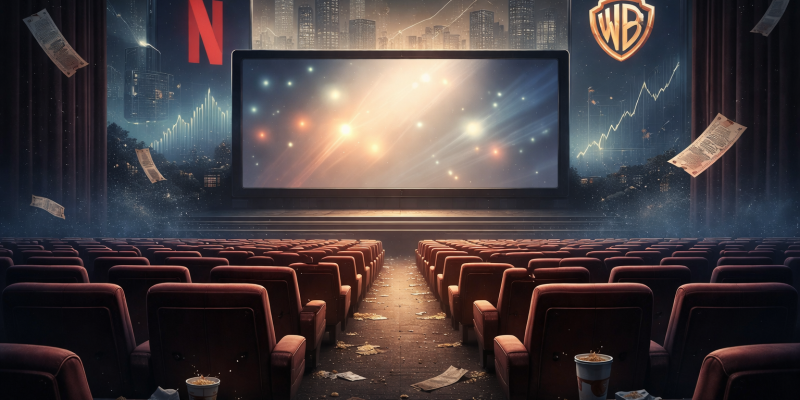
By Netflix’s acquisition of Warner Bros Discovery is poised to add more pressure to movie theatres, which are struggling to fill seats after the pandemic.
The holiday release of Avatar: Fire and Ash, the third installment in one of Hollywood’s most successful franchises, was expected to be a boost for cinemas still recovering from the pandemic.
Instead, its muted opening showed the fragile state of the theatrical business, even as movie theater owners face fresh uncertainty from potential consolidation among major studios.
An IMAX 3-D screening of Avatar at a 14-screen AMC theater in a New York City suburb was only about half full on opening night.
While the film went on to gross an estimated $88 million in the US and Canada over its opening weekend, the performance was solid rather than spectacular, highlighting broader challenges confronting the industry.
Netflix WBD deal to lead to studio consolidation risks
Theatrical operators are increasingly concerned about the implications of a potential acquisition of Warner Bros. Discovery.
Netflix has agreed to acquire Warner Bros. for $72 billion, while Paramount has made a competing hostile bid.
Industry executives warn that either outcome could reduce the number of films released exclusively in theaters.
“When legacy studios are absorbed there’s a significant decline in production,” Michael O’Leary, chief executive of Cinema United, the theatrical exhibition trade group said in a Wall Street Journal report.
Fewer studio releases and shorter theatrical exclusivity windows could further pressure attendance.
Netflix generally offers two or three weeks of theatre exclusivity for their original movies, such as recently released Frankenstein and Wake Up Dead Man: A Knives Out Mystery.
Though both Netflix and Paramount have said they would maintain traditional release strategies.
Movie attendance has already declined sharply over the past several years as streaming platforms gained traction and the pandemic disrupted film production.
Many theaters closed permanently, and those that survived were forced to invest heavily in upgrades.
According to Datex Property Solutions, real estate-related expenses now account for more than a third higher share of sales compared with 2019.
Box Office recovery remains uneven
The box office has shown signs of stabilization in 2025, with domestic ticket sales expected to reach about $8.8 billion, a 3% increase from 2024, largely due to higher ticket prices, according to Nash Information Services.
Still, that figure remains well below the more than $11 billion in annual sales recorded in the five years before the pandemic.
Analysts estimate that box office revenue needs to reach roughly $10 billion annually for theater owners to regain pre-pandemic profitability.
Achieving that level depends on a consistent pipeline of major releases.
While films like A Minecraft Movie have drawn large crowds, production disruptions from the pandemic and subsequent Hollywood labor strikes have slowed the flow of blockbusters.
Reinventing the theater experience
With limited control over film supply, theater owners have focused on enhancing the in-person experience.
Marcus Corp., for example, has spent $390 million over the past decade upgrading seating, screens, sound systems, and food offerings.
Other operators have added bowling alleys, playgrounds, and stand-alone bars to attract customers.
Flix Brewhouse, a dine-in cinema chain, has found profitability through food and beverage sales, including in-house brewed beer, but its executives stress that theatrical exclusivity remains critical to their business model.
Audience habits have also shifted. Younger viewers increasingly favor streaming, though data from Kalibrate shows that Gen Z moviegoers are returning in greater numbers.
Loyalty programs such as AMC’s Stubs A-List are also helping draw repeat customers, even as theaters rarely sell out.
As Hollywood weighs major deals and audiences balance cost against convenience, the future of movie theaters remains uncertain, dependent on both industry structure and the enduring appeal of the big-screen experience.
The post Why Netflix WBD deal is bad for theatres struggling after pandemic appeared first on Invezz