 By
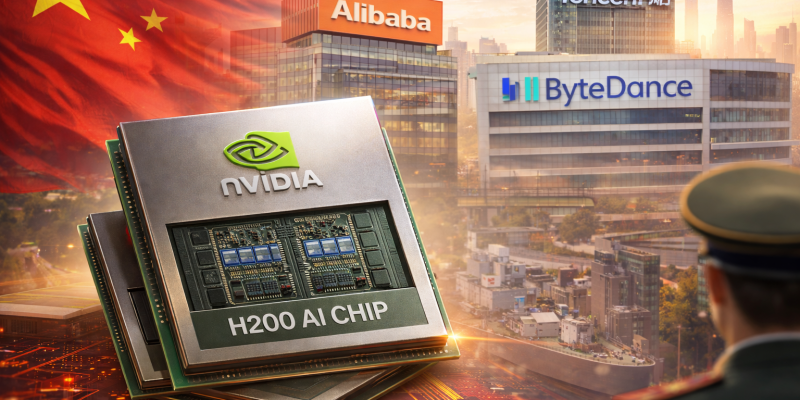
By Chipmaking giant Nvidia’s China curse may finally be easing, after reports that Chinese officials have told Alibaba and other tech companies to prepare for purchases of Nvidia’s H200 artificial intelligence chips, signalling that Beijing may be moving toward formally approving imports of the components.
According to a Bloomberg report, Chinese regulators have given in-principle approval to companies including Alibaba, Tencent Holdings and ByteDance to move to the next stage of preparations for potential purchases of Nvidia’s H200 chips.
The move signals that authorities may be softening their stance after weeks of mixed messages and regulatory uncertainty.
“The companies are now cleared to discuss specifics such as the amounts they would require, the people said, asking to remain unidentified, discussing private talks. Beijing will encourage companies to buy a certain amount of domestic chips as a condition for approval, according to the people, though no exact number has been set,” the report said.
The prospect of renewed access to the Chinese market lifted Nvidia’s shares by more than 2% in premarket trading on Friday.
Analysts estimate that demand from Chinese firms could be significant if approvals are finalised.
KeyBanc analyst John Vinh said Chinese companies may be willing to purchase around 1.5 million H200 chips, representing roughly $30 billion in potential revenue for Nvidia.
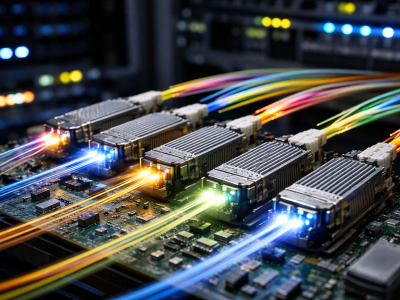
They are Nvidia’s second-most powerful AI processors and are seen as critical for training large language models and other advanced artificial intelligence systems.
Huang also expected to visit China in the coming days: report
Bloomberg’s report came in tandem with another report by CNBC, which said that Nvidia chief executive Jensen Huang is expected to visit China in the coming days, ahead of the Lunar New Year in mid-February.
Huang is scheduled to attend a company event in Beijing and is also expected to meet potential customers to discuss supply constraints and regulatory challenges surrounding US-approved chips, according to people familiar with the plans.
Nvidia’s battle with conflicting signals from regulators
As the world’s leading maker of artificial intelligence chips, the US company remains caught between Washington’s tightening grip on advanced semiconductor exports and Beijing’s determination to reduce reliance on foreign technology.
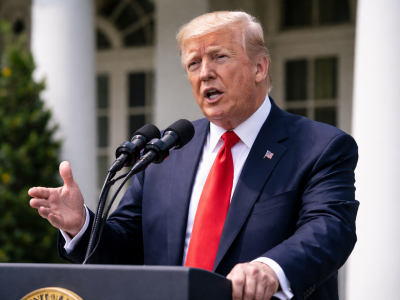
In December, US President Donald Trump had announced that his administration would remove export controls on Nvidia’s H200 artificial intelligence chips for China, reversing a ban imposed under the previous Biden administration.
However, in the beginning of January, The Information reported that Chinese regulators had asked some technology companies to stop placing new orders for H200 chips while authorities reviewed whether the processors should be allowed into the country and under what conditions.
That report suggested the move was aimed at preventing companies from stockpiling US-made chips ahead of a final policy decision, pointing to a pause rather than a definitive rejection.
The Information’s report had been swiftly followed by a Reuters report detailing how Nvidia was taking steps to protect itself financially amid the uncertainty.
Reuters reported that the company has begun demanding full upfront payment from Chinese customers seeking to purchase H200 chips, imposing stricter terms than usual to reduce exposure if approvals are delayed or withdrawn.
Then, Reuters reported on January 14 that Chinese customs authorities said the H200 chips were not permitted to enter the country.
Reuters also reported that government officials had summoned domestic technology firms and warned them against purchasing the chips unless absolutely necessary.
The sources said authorities did not clarify whether the measures amounted to a formal ban or a temporary pause.
Taiwanese server maker Inventec added to the confusion earlier this week, with its president, Jack Tsai, saying the decision on whether Nvidia can sell the H200 in China remains unresolved.
While the United States has approved exports under specific conditions, Tsai said Chinese authorities appear to be holding back approval, describing the situation as dependent on political direction rather than technical compliance.
How H200 chip has become a pressure point in US-Sino relations
The H200 chip has become one of the most sensitive pressure points in US-China relations, and analysts remain divided on Beijing’s intentions.
Some believe China may be using regulatory uncertainty as leverage, keeping options open while negotiating with Washington and managing domestic industry concerns.
Others argue Beijing is deliberately slowing approvals to encourage local chipmakers to accelerate development of homegrown alternatives.
The prospect of renewed H200 sales has also reopened debate over whether supplying advanced AI chips to China serves US strategic interests.
Supporters argue that continued access to Nvidia hardware could slow China’s development of indigenous chips and keep Chinese firms dependent on US technology ecosystems.
Critics counter that the H200 is powerful enough to support military applications, including weapons systems and surveillance platforms, potentially strengthening China’s defence capabilities.
Those concerns have gained traction in Washington, where opposition to easing chip exports remains strong.
Nvidia faces heightened legislative scrutiny at home
Even as Nvidia appears to be making progress in China, the company faces increasing scrutiny at home.
The US House of Representatives Foreign Affairs Committee this week advanced a bill aimed at expanding congressional oversight of advanced AI chip exports.
The proposal, known as the AI Overwatch Act, was introduced by committee chairman Brian Mast, a Republican from Florida.
If enacted, the legislation would require both the House Foreign Affairs Committee and the Senate Banking Committee to approve export licenses for advanced chips within 30 days, effectively giving lawmakers the ability to block sales.
The bill would also revoke existing licenses and impose a temporary ban on such transfers until the administration submits a national security strategy on AI exports.
Mast described the proposed sales as a national security risk, arguing that advanced AI chips represent the cutting edge of modern warfare.
The bill is co-sponsored by John Moolenaar, chairman of the House Select Committee on China, who called it a critical step to protect America’s technological edge.
Despite growing opposition, it remains unclear whether the AI Overwatch Act will secure sufficient support in Congress to become law.
The post Is Nvidia’s China curse about to be lifted? Beijing weighs approval to H200 AI chips appeared first on Invezz